
Keeping your dentures clean at home is easier than you might think. Finding reliable dental care starts with proper home maintenance of your dentures. This guide walks you through simple daily and weekly cleaning steps that anyone can follow. We’ll cover what supplies you need, how to create a cleaning routine, and tips to keep your dentures in great shape. These methods help maintain good mouth health and keep your smile looking its best.
Importance of Denture Cleaning
Cleaning dentures every day is vital for good mouth health and preventing problems. When you don’t clean dentures properly, plaque builds up and bacteria grow, which can cause infections. Good cleaning keeps your dentures lasting longer and protects your gums and any natural teeth you still have. Dirty dentures collect food bits and germs that create bad breath and make your gums sore. Unclean dentures can also cause oral thrush and other mouth infections. Setting up a regular cleaning schedule with the right methods helps keep your dentures clean and your mouth healthy.
Materials Needed for Cleaning
You’ll need a few basic items to clean your dentures well at home. Get a denture brush with soft bristles to scrub away food and plaque without scratching the denture surface. Use mild dish soap for daily cleaning to remove debris and germs safely. Pick up a denture cleaning solution for deeper cleaning that removes stains and bad-smelling bacteria. You’ll also need a container for soaking the dentures and a soft towel for drying them after cleaning. Having these supplies ready makes your denture cleaning routine quick and complete.
Daily Cleaning Routine
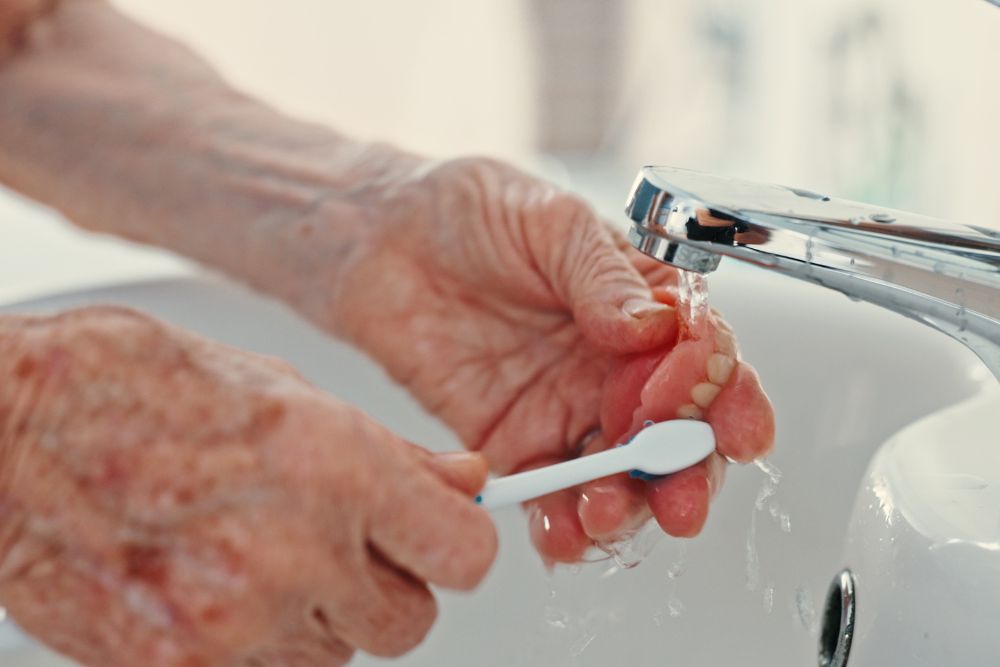
Clean your dentures every day with these simple steps. Rinse your dentures after each meal to wash away food particles. Use a soft brush and mild denture cleaner to gently scrub all surfaces, including the grooves and hard-to-reach spots. Don’t use regular toothpaste because it’s too rough and can damage your dentures. Clean your gums and any remaining natural teeth too for complete mouth care. Soak your dentures overnight in cleaning solution or water to keep them moist and prevent cracking. Following this daily routine helps your dentures last longer and keeps your mouth healthy.
Weekly Deep Cleaning Steps
Do a thorough deep cleaning once a week to keep your dentures in top condition. Please take out your dentures and rinse them with warm water to remove loose food bits. Brush them with a soft denture brush and mild cleaner, avoiding regular toothpaste that’s too harsh. Soak your dentures in denture cleaning solution or a mix of water and vinegar for 20-30 minutes to remove tough stains and kill bacteria. Rinse them well before putting them back in your mouth. This weekly deep clean keeps your dentures looking good and staying hygienic.
Tips for Maintaining Denture Hygiene
Keep your dentures in great shape with these helpful tips:
- Rinse dentures after every meal to stop food buildup
- Use gentle, circular motions when brushing to avoid damage
- Handle dentures carefully to prevent drops and cracks
- Soak overnight in denture solution to keep them moist
- Visit your dentist regularly to check the fit and condition
- Avoid hot water that can warp the denture material
- Don’t use harsh cleaners or bleach products
Following these simple tips helps your dentures stay clean, comfortable, and long-lasting while keeping your mouth healthy.
Related Topics:
Root canal treatments are supposed to clear out infection and save your tooth. But sometimes, an abscess sticks around even after the procedure is done. This can be frustrating and painful for patients who thought the problem was fixed. At West Hollywood’s best dental clinic, we see these cases and understand what’s behind them. This post breaks down the most common reasons an abscess might persist and what can actually be done about it.
Incomplete Removal of Infected Tissue
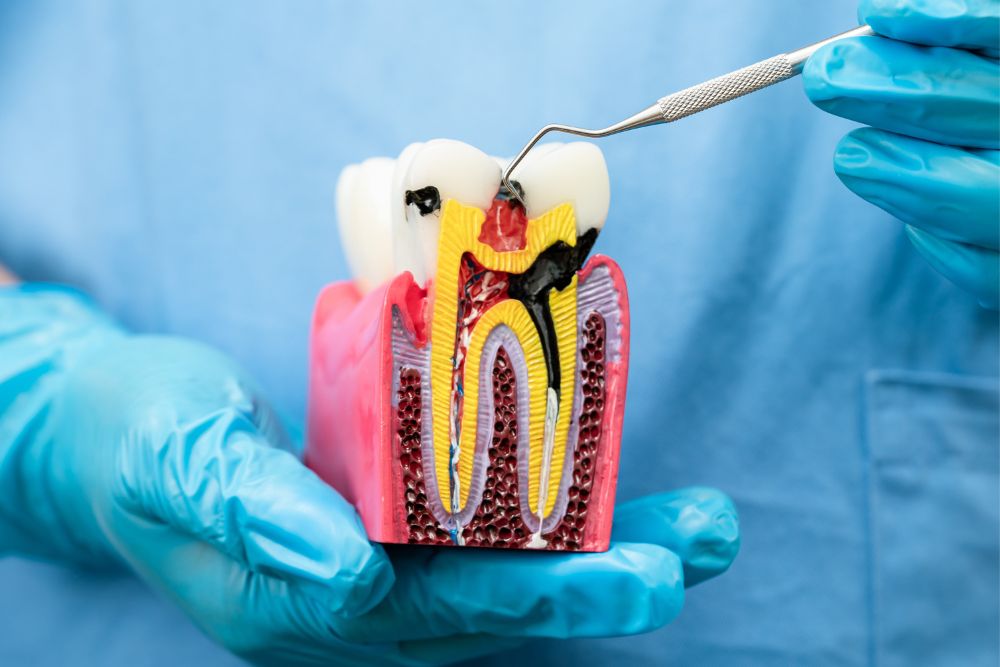
Root canal systems can be tricky to clean. Sometimes there are tiny side canals, fins, or narrow passages that hide bacteria. Standard hand tools don’t always reach these spots, leaving infected tissue behind. When that happens, the infection can flare back up and form an abscess. Using ultrasonic or rotary instruments along with microscopes helps dentists clean more thoroughly. Better cleaning reduces the risk of the abscess coming back.
Undetected Additional Canals
Finding every canal inside a tooth is harder than it sounds. Some teeth have extra canals that don’t appear on standard X-rays. If these get missed, bacteria hang out inside them and keep the infection going. Cone-beam CT scans and magnification tools make it easier to spot these hidden canals. An experienced endodontist knows where to look and how to thoroughly clean everything. Treating all the canals, not just the obvious ones, cuts down the risk of a lingering abscess.
Resistant Bacteria
Some bacteria are tougher than others. Strains such as Enterococcus faecalis and Porphyromonas gingivalis can form protective biofilms within the root canal. These biofilms make the bacteria harder to kill with standard cleaning solutions. Dentists may need to use advanced methods, such as laser-activated irrigation or specialized medications, to treat stubborn strains. Proper shaping and sealing of the canal also help eliminate these resistant bugs and prevent the abscess from lingering.
Poor Root Canal Treatment Quality
Not all root canals are done equally well. If the canals aren’t cleaned and shaped properly, or if infected tissue gets left behind, problems follow. Gaps in the filling material give bacteria a place to grow. Rushed procedures or less experienced practitioners can lead to these issues. Regular check-ups, magnification tools, and sticking to best practices all help improve treatment quality and reduce abscess risk.
Post-Treatment Complications
Even after a successful root canal, complications can still occur. Patients might experience ongoing pain, swelling, or a new abscess. This sometimes occurs due to missed canals, complex tooth anatomy, or incomplete disinfection. Thorough exams and imaging help catch these problems early. Proper sealing and restoring the tooth goes a long way in preventing issues down the line. When complications do happen, having your endodontist and general dentist communicating makes a big difference in getting things sorted out.
Delayed Crown Placement
Getting a crown placed quickly after your root canal matters more than most people realize. Waiting too long can cause problems:
- Risk of Bacterial Entry: Without a crown, bacteria can sneak back into the tooth through the access hole, restarting the infection.
- Weakened Tooth Structure: An unprotected tooth is more likely to crack or break, potentially leading to its loss.
- Appearance Issues: For front teeth, skipping or delaying the crown can affect how your smile looks and impact your confidence.
Getting your crown placed on time protects your investment in the root canal and keeps the tooth healthy for years to come.
Related Topics:
To safely and effectively fix a loose dental bridge at home, start by evaluating the bridge to determine the extent of the issue. Maintaining proper oral hygiene is essential, so brush thoroughly, floss, and rinse with mouthwash. Applying a small amount of dental adhesive can help temporarily stabilize the bridge.
Make sure the area is clean and dry before placing the bridge, and allow the adhesive to set for 5-10 minutes. Monitor the bridge for stability, checking for movement and gum irritation. Following these steps carefully can help maintain the bridge while waiting to consult a professional for quality dental care.
Assessing the Loose Dental Bridge
When a dental bridge feels loose, begin by carefully examining the area to determine the extent of the issue. Gently probe around the bridge with clean fingers to detect movement or discomfort. Check whether the bridge remains securely attached to the surrounding teeth and inspect for any signs of damage or wear.
Examine the gums for signs of redness or inflammation, as these can provide clues about oral health. This assessment helps identify the cause of the looseness and guides the steps needed to stabilize the bridge safely.
Cleaning the Area Thoroughly
Proper cleaning is important for maintaining the health of a loose dental bridge. Use a soft-bristled toothbrush to brush around the bridge, reaching all edges where debris and bacteria can accumulate. Floss underneath the bridge with a floss threader or specialized floss to remove trapped particles.
Rinsing with an antimicrobial mouthwash helps reduce the amount of bacteria. Ensuring a clean oral environment supports the bridge’s function and contributes to long-term dental health. Regular dental visits are recommended to monitor the bridge and surrounding teeth.
Applying Dental Adhesive
Applying dental adhesive can temporarily secure a loose dental bridge until professional care is available. Before applying, confirm the bridge and surrounding teeth are clean and dry. Apply a small amount of adhesive to the inner surface of the bridge, then carefully place it back into position.
Hold it gently in place for a few moments to allow the adhesive to set. Following the product instructions ensures proper application and effectiveness. This step can help restore stability and reduce discomfort while waiting for a permanent solution.
Securing the Bridge in Place
To maintain the bridge’s stability, gently bite down on a piece of clean gauze or a cotton swab after applying the adhesive. This pressure helps the bridge bond securely with the supporting teeth. Avoid chewing sticky or hard foods that could dislodge the bridge.
Regularly inspect the bridge for looseness or damage. Consistent oral hygiene and mindful eating habits support the bridge’s longevity and ensure it functions correctly during daily activities.
Allowing Time for Adhesive to Set
After applying the adhesive, allow 5-10 minutes for it to bond fully. Avoid eating or drinking during this period to prevent disturbing the setting process.
Apply gentle pressure if needed to ensure proper alignment, but do not force the bridge into place. Giving the adhesive enough time to set properly helps create a stable and durable temporary hold for the bridge.
Monitoring the Bridge for Stability
Once the bridge is in place, observe it carefully to ensure it remains secure. Test for movement by gently biting and moving your jaw from side to side. Check for gum irritation, such as redness, swelling, or soreness, which may indicate improper fit.
Start with soft foods and gradually test harder textures to confirm the bridge’s stability while chewing. Regular monitoring helps identify potential problems early and reduces the risk of further complications.
Related Topics:
- How Long After Dental Bridge Can I Eat: Dos and Don’ts for Healing
- How to Clean Dental Bridge for a Healthier Smile
Missing one or more teeth can affect much more than the appearance of your smile. Tooth loss may make it difficult to chew certain foods, speak clearly, or smile confidently in professional and social settings. Over time, missing teeth can also contribute to changes in your bite and the bone structure that supports your facial appearance.
At Sargon Dental, we provide advanced dental implant treatments for patients in West Hollywood, Beverly Hills, Hollywood, Beverly Grove, Melrose, Fairfax, Laurel Canyon, Century City, and surrounding Los Angeles communities. Our West Hollywood dental office is conveniently located on the Sunset Strip at 8711 Sunset Blvd, West Hollywood, CA 90069.
Led by Dr. Sargon Lazarof, Sargon Dental offers personalized solutions for replacing a single missing tooth, several teeth, or an entire arch. Treatment options may include Ultratooth™ immediate-load dental implants, traditional implant-supported restorations, full-mouth dental implants, implant-supported dentures, zirconia fixed bridges, bone grafting, sinus lifts, sedation dentistry, and comprehensive full-mouth reconstruction.
Every implant treatment plan begins with a detailed examination. We evaluate your remaining teeth, gums, jawbone, bite, medical history, aesthetic goals, and long-term oral health before recommending a procedure.
What Are Dental Implants?
Dental implants are designed to replace the root structure of missing teeth. An implant is placed within the jawbone to create a stable foundation for a dental crown, bridge, denture, or full-arch restoration.
Once restored, a dental implant can help replace both the visible portion of the missing tooth and the support that its root would normally provide. This is one of the important differences between dental implants and conventional tooth-replacement options that rest primarily on the gums.
A complete dental implant restoration generally includes three components. The implant is positioned in the jawbone, an abutment connects the implant to the restoration, and a custom crown, bridge, or full-arch prosthesis replaces the visible teeth.
The exact design of your restoration will depend on the number and location of missing teeth, the condition of your jawbone, your bite, and your treatment goals.
Why Do Patients Choose Dental Implants?
Patients frequently choose dental implants because they want a tooth-replacement solution that feels stable and looks natural. Unlike removable dentures, a fixed implant restoration is anchored in place and does not depend solely on adhesives or suction.
- Dental implants may help patients:
- Restore the appearance of missing teeth
- Improve chewing stability
- Speak and smile with greater confidence
- Avoid movement associated with loose dentures
- Support a dental crown without modifying adjacent healthy teeth
- Replace several teeth with an implant-supported bridge
- Support a fixed or removable full-arch restoration
- Maintain stimulation within the jawbone
- Create a more complete and balanced smile
The benefits available to each patient depend on their oral health, bone structure, implant placement, restoration design, home care, and follow-up maintenance.
Ultratooth™ Immediate-Load Dental Implants in West Hollywood
Sargon Dental is the home of Ultratooth™, an immediate-load dental implant developed by Dr. Sargon Lazarof. The implant features an expansion mechanism designed to establish stability within the jawbone at the time of placement. For qualified patients, this may allow placement of a fixed functional restoration without the extended unloaded healing period commonly associated with conventional implant protocols.
Same-day treatment does not mean every stage of implant dentistry is completed identically for every patient. Your eligibility depends on factors such as bone quality, bone quantity, gum health, bite pressure, the location of the missing tooth, and the presence of infection.
During your consultation, Dr. Lazarof and the Sargon Dental team will evaluate whether an immediate-load implant is appropriate or whether a different implant approach would yield a safer, more predictable result.
Can I Receive a Dental Implant in One Day?
Many patients searching for a West Hollywood dental implants dentist want to know whether they can receive a new tooth in one appointment.
Some qualified patients may be candidates for immediate implant placement and loading. This means an implant and a fixed temporary or functional restoration may be placed during the same visit. However, same-day dental implants are not the right option for everyone.
Before recommending immediate treatment, we must evaluate:
- The amount and density of available jawbone
- The health of the surrounding gum tissue
- Whether an infected or damaged tooth must be removed
- The location of the missing tooth
- The amount of pressure created by your bite
- Whether you grind or clench your teeth
- Your overall health and healing capacity
- Your ability to follow postoperative instructions
If additional healing, bone grafting, or infection control is needed, your treatment may be completed in carefully planned stages. The objective is not merely to provide the fastest procedure. It is to create a stable, functional, attractive restoration with the best possible foundation for long-term success.
Single-Tooth Dental Implants
A single-tooth implant can replace one missing or non-restorable tooth without requiring a conventional bridge supported by the neighboring teeth.
The implant is placed in the area of the missing tooth and restored with a custom dental crown. The crown is designed to coordinate with the color, shape, position, and proportions of the surrounding teeth.
- Single-tooth implants may be considered when a tooth has been lost because of:
- Severe tooth decay
- A fractured tooth or root
- Advanced periodontal disease
- A failed root canal
- A sports injury
- An automobile accident
- A congenital condition
- Another form of dental trauma
When an existing tooth cannot be saved, we will explain whether extraction and implant placement can occur during the same appointment or should be completed separately.
Multiple-Tooth Dental Implants
Patients missing several neighboring teeth may not need an individual implant for every missing tooth. In many cases, strategically placed implants can support a dental bridge that replaces multiple teeth.
An implant-supported bridge does not rely on adjacent natural teeth in the same way a traditional bridge does. This may help preserve healthy tooth structure while creating a stable, fixed restoration.
The number of implants required depends on the length and location of the missing tooth area, the available bone, and the forces applied to that section of the mouth.
Full-Mouth Dental Implants in West Hollywood
Full-mouth dental implants are designed for patients who have lost most or all of their teeth or whose remaining teeth cannot be predictably restored.
Rather than placing one implant for every tooth, a planned number of implants can support a complete fixed bridge. This approach can replace an entire upper arch, lower arch, or both arches.
Full-mouth dental implants may be appropriate for patients experiencing:
- Multiple missing teeth
- Extensive tooth decay
- Advanced gum disease
- Repeated dental treatment failures
- Broken or severely worn teeth
- Difficulty eating with removable dentures
- Loose or uncomfortable dentures
- A collapsing bite
- Significant changes in facial support
A full-mouth implant procedure must address more than the replacement of teeth. The dentist must also consider the patient’s bite, jaw relationship, available restorative space, facial proportions, speech, gum display, and preferred tooth shape and color.
Sargon Dental develops each full-mouth treatment plan around the patient’s clinical needs and desired appearance. The objective is to restore comfortable function while creating a smile that fits naturally with the patient’s face.
Zirconia Fixed Bridges
A zirconia fixed bridge is one of the restorative options available for implant-supported full-arch treatment. Zirconia is a strong, tooth-colored ceramic material that can be customized to create a natural-looking set of replacement teeth.
Because zirconia is non-porous and stain-resistant, it is frequently chosen by patients seeking durability, hygiene, and lifelike aesthetics. The final bridge is designed around the patient’s bite, facial characteristics, lip position, gum line, and desired tooth shade.
During your consultation, we will explain the available restorative materials and help you compare their appearance, maintenance requirements, durability, and suitability for your bite.
Dental Implants Versus Removable Dentures
Traditional dentures remain a practical solution for some patients, but they rest primarily on the gums and may gradually become less secure as the underlying jawbone changes.
Patients with loose dentures may experience denture movement while eating or speaking, gum irritation, reduced chewing ability, or reliance on dental adhesives.
Dental implants can be used to stabilize a removable denture or support a permanently fixed restoration. Implant-supported options generally provide greater stability than conventional dentures, but the most appropriate design depends on your anatomy, health, preferences, and budget.
Sargon Dental offers fixed and removable tooth-replacement options. We explain the advantages and limitations of each approach so you can make an informed decision rather than being automatically directed toward a single treatment.
Do I Have Enough Bone for Dental Implants?
Dental implants require sufficient bone for support. When a tooth has been missing for an extended period, the surrounding bone may lose height, width, or density.
Insufficient bone does not necessarily mean that dental implant treatment is impossible. Depending on the location and severity of the bone loss, preparatory procedures may help rebuild the implant site.
These procedures may include bone grafting, socket preservation, ridge augmentation, or a sinus lift.
A bone graft adds material to an area where additional support is needed. A sinus lift may be recommended when insufficient bone height is available in the upper back jaw beneath the sinus cavity.
Some grafting procedures may be completed at the time of tooth extraction or implant placement. Other cases require a separate healing period. Your treatment sequence will be determined after a clinical examination and diagnostic imaging.
Sedation Dentistry for Dental Implant Patients
Dental anxiety can prevent patients from seeking treatment even when missing, broken, or infected teeth are affecting their health and daily life.
Sargon Dental offers sedation dentistry for qualifying patients who feel nervous about implant surgery, have had difficult dental experiences, possess a strong gag reflex, or require extensive treatment.
Sedation may also allow multiple procedures to be completed more comfortably during a longer appointment. The appropriate option depends on your health history, anxiety level, planned procedure, and other clinical factors.
Your safety is always the priority. We will review your medical information, medications, and transportation requirements before recommending sedation. Sargon Dental provides sedation services at its Encino and West Hollywood locations.
What Happens During a Dental Implant Consultation?
Your dental implant consultation is an opportunity to understand both your current condition and the treatment options available to you.
The consultation may include an evaluation of your teeth and gums, diagnostic imaging, an assessment of your bone structure, a bite analysis, and a review of your medical and dental history.
We will discuss:
- Which teeth can be preserved
- Which teeth may need to be removed
- Whether you have sufficient bone
- Whether grafting may be necessary
- Whether immediate-load treatment may be appropriate
- How many implants may be recommended
- What type of restoration may be used
- Whether sedation should be considered
- The anticipated treatment sequence
- Your recovery and maintenance requirements
- Your available insurance and financing options
After the evaluation, you will receive a personalized recommendation. We encourage patients to ask questions and understand why a particular approach is being proposed.
What Is the Dental Implant Process?
The dental implant process varies according to the patient and the type of restoration being placed.
Treatment generally begins with examination and digital planning. If a damaged tooth remains, it may need to be removed. Bone grafting may also be completed when additional support is required.
The implant is then positioned within the planned area of the jawbone. Depending on implant stability and the selected protocol, a temporary tooth or restoration may be attached immediately or after a healing period.
Once the tissues and supporting structures are ready, the implant is restored with a customized crown, bridge, denture, or full-arch prosthesis.
Follow-up appointments allow the dental team to evaluate healing, function, bite balance, hygiene, and the condition of the restoration.
How Long Do Dental Implants Last?
Dental implants are intended to provide long-term tooth replacement, but no dentist can promise that an implant will last for a specific number of years.
Implant longevity depends on several factors, including:
- The quality and quantity of the surrounding bone
- The health of the gums
- Implant position
- Restoration design
- Bite pressure
- Teeth grinding or clenching
- Smoking or nicotine use
- Medical conditions
- Oral hygiene
- Professional maintenance
- Compliance with follow-up care
The implant placed within the bone and the visible crown or bridge should also be considered separately. Although an implant may remain stable, the restoration attached to it may eventually require repair or replacement because of wear.
Regular dental examinations and professional cleanings are essential for protecting the gums and bone around an implant.
How Should I Care for Dental Implants?
Dental implants cannot develop cavities, but the surrounding gums and bone remain vulnerable to inflammation and infection.
Patients should brush carefully, clean between the implant restorations, and attend regular maintenance appointments. Depending on the restoration, special floss, interdental brushes, water flossers, or other hygiene tools may be recommended.
Contact your dentist if you notice bleeding, swelling, persistent discomfort, an unpleasant taste, difficulty chewing, or movement in an implant restoration.
Early evaluation can help prevent a minor maintenance issue from becoming a more serious complication.
Why Choose Dr. Sargon Lazarof for Dental Implants?
Dr. Sargon Lazarof earned his Doctor of Dental Surgery degree with honors from the University of Southern California School of Dentistry in 1986. He later developed Ultratooth™, an immediate-load dental implant designed to achieve stability at the time of placement.
At Sargon Dental, implant treatment is approached as a combination of surgery, restorative dentistry, function, and smile design. Patients can receive implant placement, oral surgery, cosmetic restorations, sedation, and follow-up care through one coordinated dental practice.
Our team takes time to understand what concerns you most, whether that is discomfort, appearance, treatment time, dental anxiety, difficulty eating, or frustration with removable dentures.
A Dental Implant Dentist on the Sunset Strip
Sargon Dental’s West Hollywood office is located at:
8711 Sunset Blvd
West Hollywood, CA 90069
Phone: (310) 800-1060
The office serves patients throughout West Hollywood and neighboring Los Angeles communities, including Beverly Hills, Hollywood, Beverly Grove, Melrose, Fairfax, Laurel Canyon, Los Feliz, Century City, and surrounding areas.
Our Sunset Boulevard location offers patients implant consultations, dental implant surgery, restorative treatment, cosmetic dentistry, sedation dentistry, and ongoing care from a coordinated dental team.
Schedule a West Hollywood Dental Implant Consultation
You do not have to continue living with missing teeth, unstable dentures, recurring dental problems, or a smile that makes you uncomfortable.
The first step is a comprehensive dental implant consultation. After evaluating your oral health and listening to your concerns, the Sargon Dental team will explain which treatment options may help you restore your smile.
Call Sargon Dental’s West Hollywood office at (310) 800-1060 or request an appointment online.
Frequently Asked Questions About Dental Implants in West Hollywood
1. Who is a good candidate for dental implants?
A potential candidate should generally have healthy gums, adequate jawbone, and medical health that supports normal healing. Patients with bone loss, gum disease, or complex dental problems may still qualify after additional treatment. A comprehensive examination is necessary to determine candidacy.
2. Can I get a dental implant immediately after a tooth extraction?
In some cases, an implant can be placed immediately after a damaged tooth is removed. The decision depends on infection, bone condition, gum health, implant stability, and the location of the tooth. Other patients benefit from allowing the extraction site to heal first.
3. Does Sargon Dental offer same-day dental implants in West Hollywood?
Sargon Dental offers Ultratooth™ immediate-load dental implants for qualified candidates. Some patients may receive an implant and fixed functional restoration during the same visit. Eligibility must be confirmed through a clinical evaluation and diagnostic imaging.
4. Are dental implants painful?
Local anesthesia is used to control discomfort during treatment, and sedation may be available for qualifying patients. Temporary soreness, swelling, or sensitivity can occur during recovery. The extent of discomfort depends on the procedure, the number of implants, and whether extraction or grafting is also completed.
5. How long does dental implant treatment take?
The timeline varies considerably. Some immediate-load treatments may provide a fixed restoration on the day of placement, while traditional or complex cases may require several months of healing. Bone grafting, sinus lifts, extractions, and full-mouth reconstruction can also affect the timeline.
6. Can dental implants replace all my teeth?
Yes. A planned number of implants can support a fixed full-arch bridge or an implant-supported denture. The dentist will evaluate your bone structure, bite, health, restorative space, and aesthetic goals before recommending a full-mouth solution.
7. Can I receive dental implants if I have bone loss?
Many patients with bone loss can still be considered for implant treatment. Bone grafting, ridge augmentation, or a sinus lift may be recommended to create additional support. The severity and location of the bone loss will determine your available options.
8. Are dental implants better than dentures?
Implants generally provide greater stability and chewing support than conventional dentures. However, dentures may still be appropriate for certain patients. Implant-supported dentures can also provide a middle option between traditional removable dentures and a permanently fixed full-arch bridge.
9. Does dental insurance cover dental implants?
Coverage varies by insurance plan. A policy may cover certain portions of the examination, extraction, grafting, implant placement, abutment, or final restoration while excluding others. Sargon Dental can help you review available benefits and discuss financing options.
10. How do I find the right dental implant dentist in West Hollywood?
Look for a dentist who performs a comprehensive evaluation, explains multiple treatment options, considers both surgical and restorative options, discusses risks and maintenance, and provides a personalized plan. You should understand who will perform each stage, what materials will be used, how complications are managed, and what follow-up care is included.