
If you are missing most or all of your teeth but want more stability than traditional removable dentures can provide, implant-supported dentures may be an effective tooth replacement option. Instead of resting only on the gums, these dentures are stabilized by dental implants placed in the jawbone.
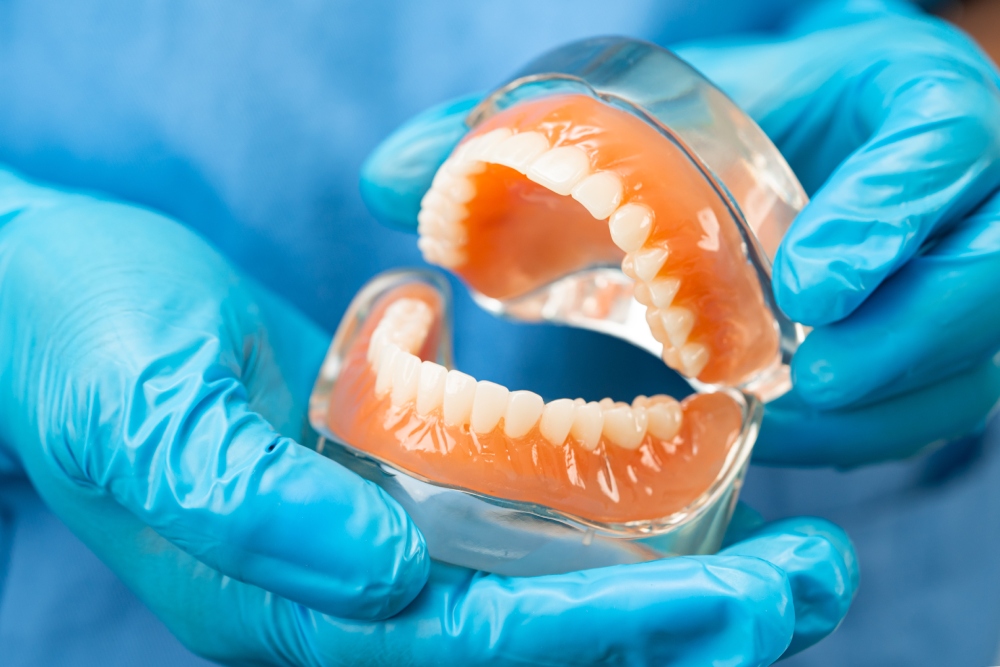
For patients in Los Angeles, Encino, West Hollywood, and surrounding Southern California communities, implant-supported dentures can provide greater confidence when eating, speaking, and smiling. Because the restoration is connected to dental implants, it can significantly reduce the movement and slipping commonly associated with conventional dentures.
At Sargon Dental, each treatment begins with a detailed evaluation to determine whether implant-supported dentures, full-mouth dental implants, traditional dentures, or another restorative approach best fits the patient’s oral health, bone structure, and goals.
What Are Implant-Supported Dentures?
Implant-supported dentures are replacement teeth that use dental implants for support and stability.
Dental implants are placed into the jawbone, where they act as anchors for the denture. Depending on the treatment design, the finished teeth may be removable for cleaning or secured more firmly to the implants.
Traditional dentures rely primarily on the gums and underlying tissues for support. Implant-supported dentures transfer more of that support to the implants, helping create a more secure fit.

This can be especially valuable for people who have experienced loose dentures, difficulty chewing certain foods, changes in speech, or anxiety about dentures shifting during everyday activities.
How Are Implant-Supported Dentures Different From Traditional Dentures?
The main difference is stability.
Traditional dentures sit on top of the gums and may rely on suction, denture adhesive, or the shape of the patient’s mouth to remain in place.
Implant-supported dentures connect to implants anchored in the jaw.
Potential advantages include:
- Greater denture stability
- Less movement while eating or speaking
- Improved chewing function
- Reduced dependence on denture adhesives
- A more secure feeling during everyday activities
- Better support for a natural-looking smile
- Stimulation of the jawbone around implant sites
The right solution depends on your oral health, remaining bone, number of missing teeth, expectations, lifestyle, and budget.
What to Expect During Implant-Supported Denture Treatment
Treatment is customized for every patient. Some people may need only implant placement and restoration, while others may require tooth extraction, bone grafting, gum treatment, or other preparatory procedures before receiving implants.
Step 1: Evaluation and 3D Imaging
Your treatment begins with a comprehensive dental examination and Imaging.
The dentist evaluates your teeth, gums, bite, jawbone, medical history, and existing dentures if you currently wear them. Digital X-rays or 3D Imaging may be used to image bone quantity and identify important anatomical structures.
This information helps determine:
- Whether you are a candidate for dental implants
- How many implants may be appropriate
- Where the implants should be positioned
- Whether bone grafting may be necessary
- What type of denture or implant restoration may work best
This first appointment is also an opportunity to discuss your priorities, including appearance, comfort, chewing ability, treatment time, and cost.
Step 2: Creating Your Personalized Treatment Plan
After evaluating your mouth and Imaging, the dental team develops a treatment plan based on your individual anatomy and restorative needs.
Your plan may address:
- Number and location of dental implants
- Tooth extractions if necessary
- Bone grafting or other preparatory procedures
- Temporary teeth during treatment
- Removable versus fixed restoration options
- Sedation options
- Estimated healing period
- Final denture design
- Costs and financing considerations
No single implant-supported denture treatment is appropriate for every patient. Careful planning is essential because the implants and final teeth must work together as part of the patient’s bite.
Step 3: Placing the Dental Implants
Dental implants are surgically placed in carefully selected areas of the jawbone.
Local anesthesia is commonly used, and sedation may also be considered depending on the procedure and the patient’s comfort level.
With conventional implant treatment, a healing period may be required while the implant integrates with the surrounding bone. This biological process is known as osseointegration.
Healing time varies from patient to patient. Bone quality, implant location, overall health, smoking history, the number of implants, and whether bone grafting was performed can all influence the timeline.
Some qualified patients may also be candidates for immediate-load dental implant treatment, depending on implant stability, bone conditions, bite forces, and the specific restorative plan.
Sargon Dental can evaluate whether a conventional healing protocol or an immediate-load implant approach is appropriate for your particular case.
Step 4: Attaching Your Implant-Supported Dentures
After the implants are stable and the mouth is ready for the final restoration, your customized denture is connected to the implants.
The dentist evaluates:
- Fit
- Bite alignment
- Comfort
- Tooth position
- Smile appearance
- Speech
- Chewing function
Adjustments may be made to improve comfort and ensure that the restoration functions properly.
Your dental team will also explain how to clean around the implants and care for your new teeth at home.
How Long Does Implant-Supported Denture Treatment Take?
There is no universal treatment timeline.
Some traditional implant cases require several months between implant placement and the final restoration because the implants need time to integrate with the jawbone.
Other patients may qualify for treatment protocols that allow temporary or functional teeth to be placed sooner.
Your actual treatment time depends on factors such as:
- Bone density
- Number of implants
- Implant stability
- Need for extractions
- Need for bone grafting
- Gum health
- Type of final restoration
- Healing response
A personalized examination and 3D Imaging provide a much more accurate timeline than a general estimate.
Who Is a Good Candidate for Implant-Supported Dentures?
Implant-supported dentures may be considered for people who have lost all or many of their teeth and want a more stable alternative to conventional dentures.
Potential candidates generally need adequate oral health and enough bone to support dental implants, although bone grafting may make implant treatment possible for some patients with bone loss.
A dentist will also evaluate factors such as gum health, medical conditions, medications, smoking, oral hygiene, and the patient’s ability to maintain the implants after treatment.
Age alone does not determine whether someone can receive dental implants. Overall health, oral condition, bone quality, and healing ability are generally more important considerations.
Can Implant-Supported Dentures Help With Loose Dentures?
One of the most common reasons patients consider implant-supported dentures is dissatisfaction with loose or unstable conventional dentures.
As the jawbone and gum tissues change over time, traditional dentures may become less secure. They can move when you chew, laugh, cough, or speak.
Because implant-supported dentures connect to implants anchored in the jaw, they can provide significantly greater stability than dentures that rely exclusively on the gums for support.
Can You Eat Normally With Implant-Supported Dentures?
Many patients find that improved denture stability makes eating more comfortable and predictable.
The amount of chewing force you can comfortably use depends on the type of restoration, number and position of implants, your bite, healing status, and overall oral condition.
During healing, your dentist may recommend a softer diet and a gradual return to firmer foods.
After treatment is complete, patients often appreciate being able to eat, speak, and socialize with greater confidence because their dentures are less likely to shift unexpectedly.
How Do You Clean Implant-Supported Dentures?
Dental implants cannot develop cavities, but the gums and tissues around them still require consistent care.
Proper hygiene helps protect the tissue and bone supporting the implants.
Depending on your restoration, your routine may include:
- Brushing your denture and implant areas
- Cleaning around implant attachments
- Using floss or specialized implant-cleaning aids
- Using a water flosser when recommended
- Removing a removable denture for cleaning
- Scheduling professional dental cleanings
- Receiving periodic examinations and dental Imaging
Your dentist will provide imaging instructions specifically for your type of restoration.
Implant-Supported Dentures in Encino and West Hollywood
Patients searching for implant-supported dentures in Los Angeles can receive an individualized evaluation at Sargon Dental’s Encino and West Hollywood offices.
Treatment planning considers much more than simply replacing missing teeth. The dental team evaluates bone support, facial proportions, bite alignment, gum health, smile appearance, and long-term maintenance before recommending a restorative approach.
Depending on the patient’s needs, treatment options may include conventional dentures, implant-supported dentures, full-mouth dental implants, fixed implant-supported restorations, or other forms of full-mouth reconstruction.
For patients interested in faster implant treatment, Sargon Dental can also determine whether an immediate-load dental implant approach may be appropriate based on clinical findings.
Find Out Whether Implant-Supported Dentures Are Right for You
If loose dentures or extensive tooth loss are affecting the way you eat, speak, or smile, implant-supported dentures may provide a more stable solution.
The best way to determine your options is through an examination and diagnostic Imaging. Your dentist will assess your bone structure, gum health, bite, existing teeth, and goals before recommending the appropriate type of dental implant or denture treatment.
Sargon Dental serves patients throughout Encino, West Hollywood, the San Fernando Valley, Los Angeles, and surrounding Southern California communities who are considering implant-supported dentures and other advanced tooth replacement options.
Frequently Asked Questions About Implant-Supported Dentures
1. What are implant-supported dentures?
Implant-supported dentures are replacement teeth that connect to dental implants placed in the jawbone. The implants provide more stability than conventional dentures that rest primarily on the gums.
2. Are implant-supported dentures removable?
They can be. Some implant-supported dentures are designed to snap onto implant attachments and can be removed by the patient for cleaning. Other implant-supported full-arch restorations are fixed and are typically removed only by a dental professional when necessary.
3. How many implants are needed for implant-supported dentures?
The number varies based on the patient’s jawbone, denture design, implant positions, bite forces, and treatment goals. Diagnostic Imaging and a clinical examination are necessary to determine the appropriate number.
4. Are implant-supported dentures better than regular dentures?
They can provide greater stability, chewing confidence, and retention for many patients. However, conventional dentures remain appropriate for some people. The better choice depends on oral health, anatomy, lifestyle, treatment preferences, and budget.
5. Do implant-supported dentures prevent bone loss?
Dental implants stimulate the jawbone where they are placed, which can help preserve bone around the implant sites. They do not completely prevent every age-related or anatomical change in the jaw.
6. How long do implant-supported dentures last?
Dental implants and the denture restoration have different lifespans. Implants can function for many years with proper care, while denture teeth, attachment components, or other restorative materials may eventually require maintenance, adjustment, repair, or replacement.
7. Can I get implant-supported dentures if I have bone loss?
Possibly. Some patients with bone loss can still receive dental implants, while others may require bone grafting or another treatment first. 3D Imaging helps the dentist evaluate available bone and possible implant locations.
8. Will I be without teeth while my implants heal?
Not necessarily. Temporary teeth or dentures may often be used during treatment. Some qualified patients may also be candidates for immediate-load treatment. Your dentist will determine the safest temporary and final restoration plan for your situation.
9. How much do implant-supported dentures cost in Los Angeles?
Cost varies based on the number of implants, denture type, materials, diagnostic Imaging, extractions, bridging, sedation, and other treatment requirements. An examination is necessary to provide an individualized treatment estimate.
10. Where can I get evaluated for implant-supported dentures in Los Angeles?
Sargon Dental evaluates patients for implant-supported dentures and other dental implant solutions at its Encino and West Hollywood locations. A consultation and diagnostic Imaging can help determine the best tooth replacement approach for your oral health and goals.
Leaving cavities without treatment can cause serious problems for your teeth and health. This guide explains what happens when tooth decay goes untreated and why quick action matters. You’ll learn about the risks, how cavities worsen over time, warning signs to watch for, and the problems that can happen if you wait too long. Getting help early can save your teeth and prevent pain, so visit your dental clinic as soon as you notice any issues.